



From October 6, 2025 (Mon) to February 9, 2026 (Mon), Ehime University’s Institute for International Relations conducted the Japan International Cooperation Agency (JICA)’s Knowledge Co-creation Program (KCCP) titled “Promotion of Food Value Chain for Community-Based Agri-Business.” This program was designed for government, industry, and academic professionals from Latin American countries who are involved in food value chain*-related work.
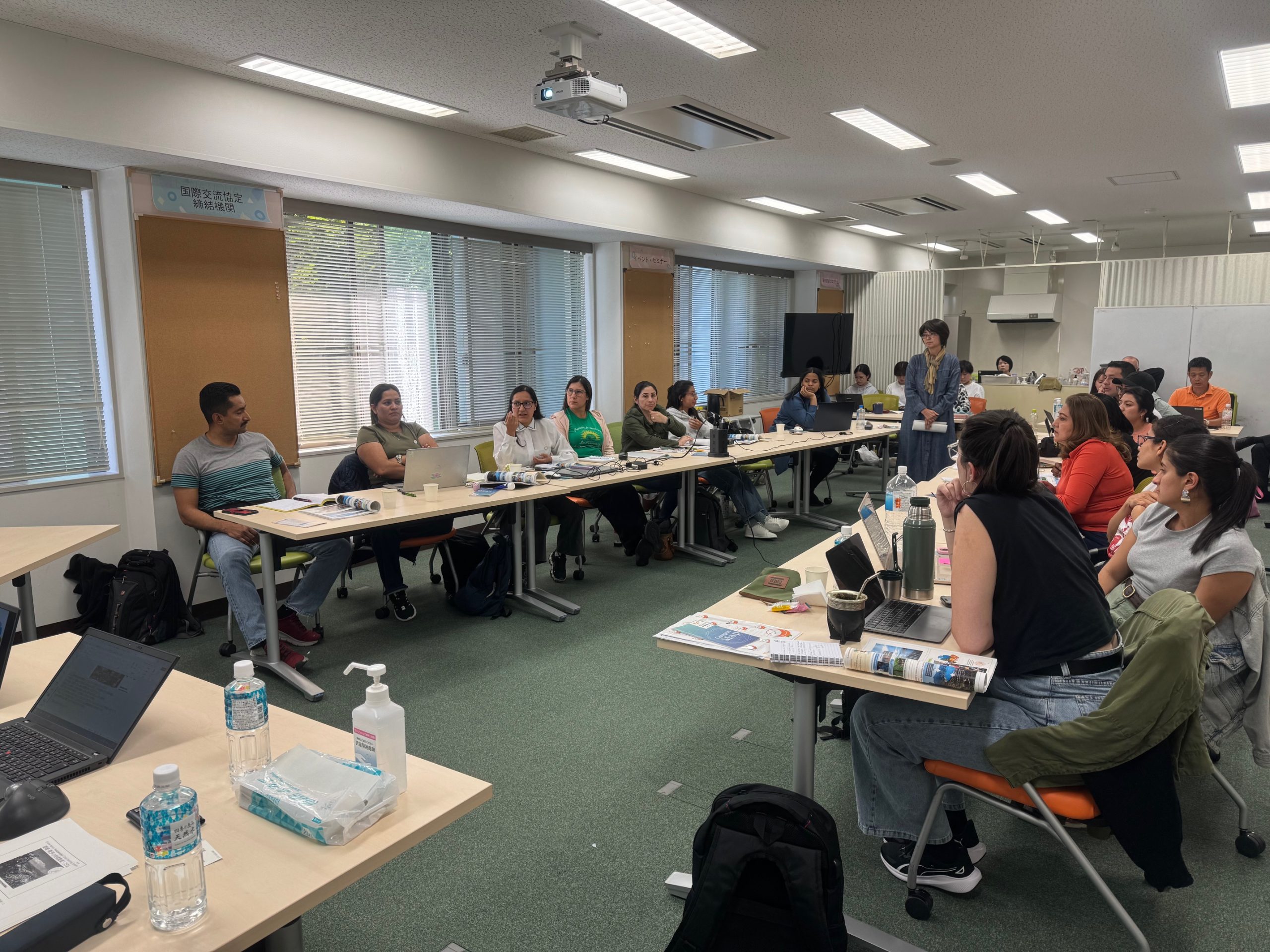
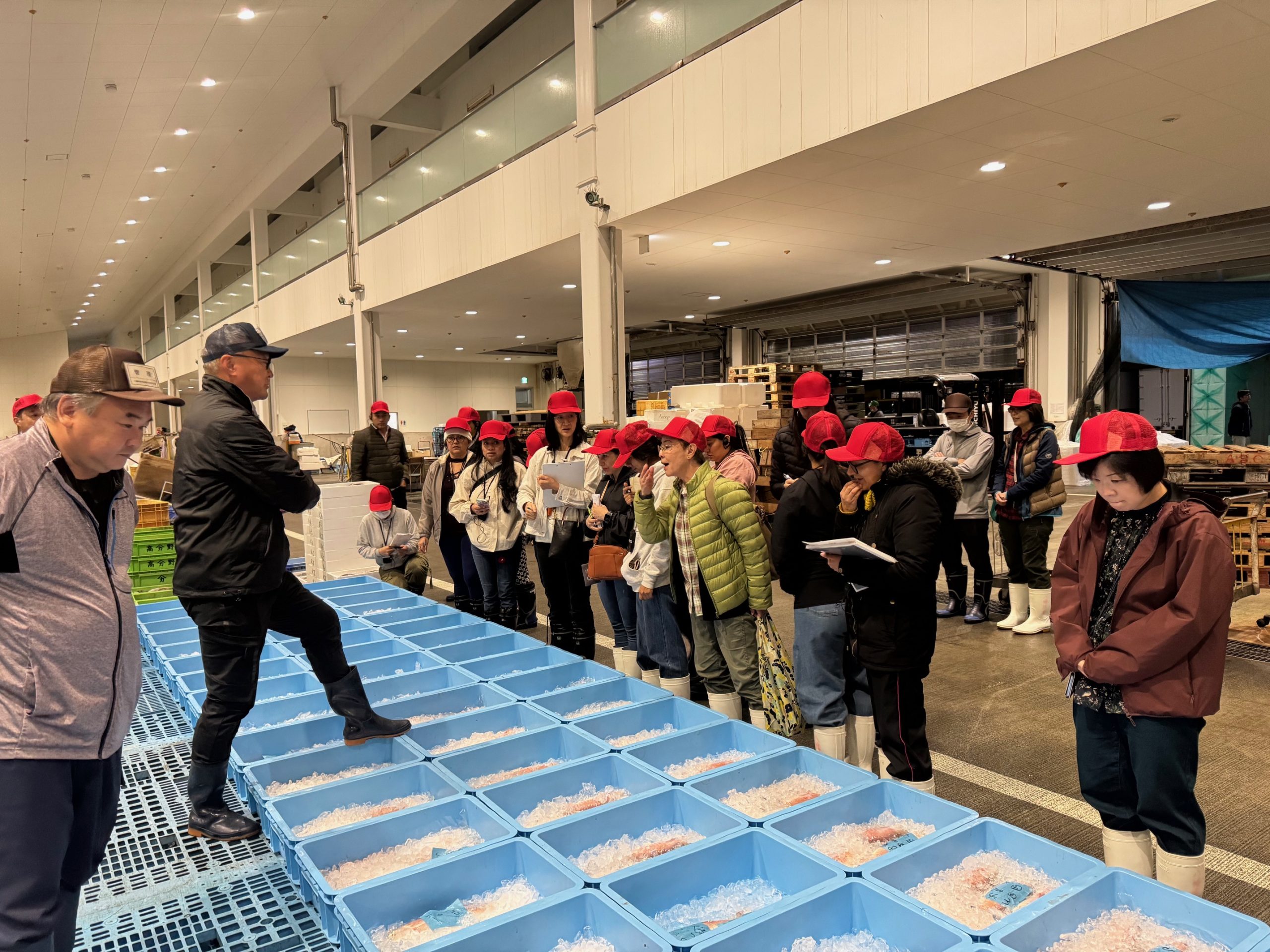
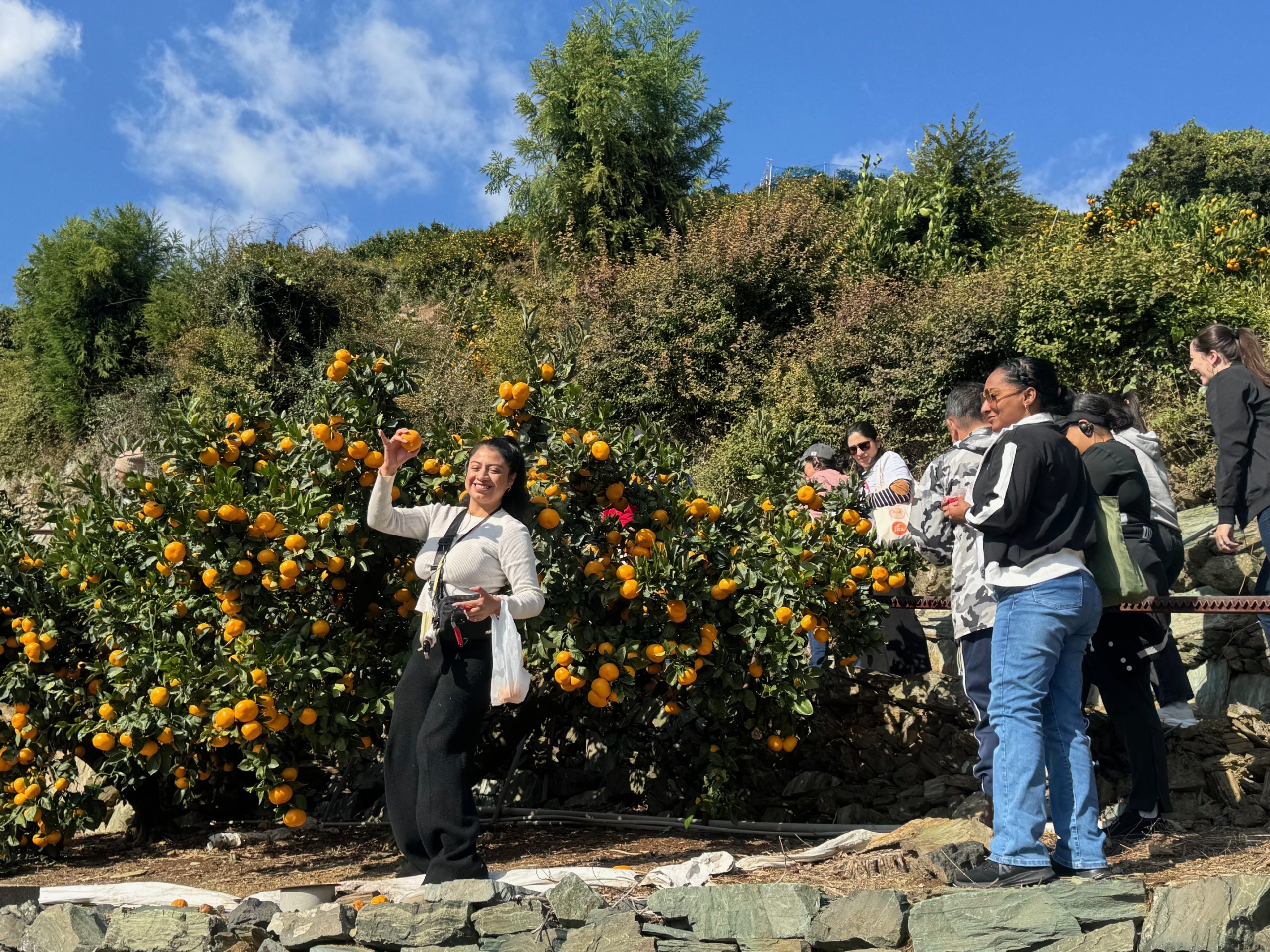
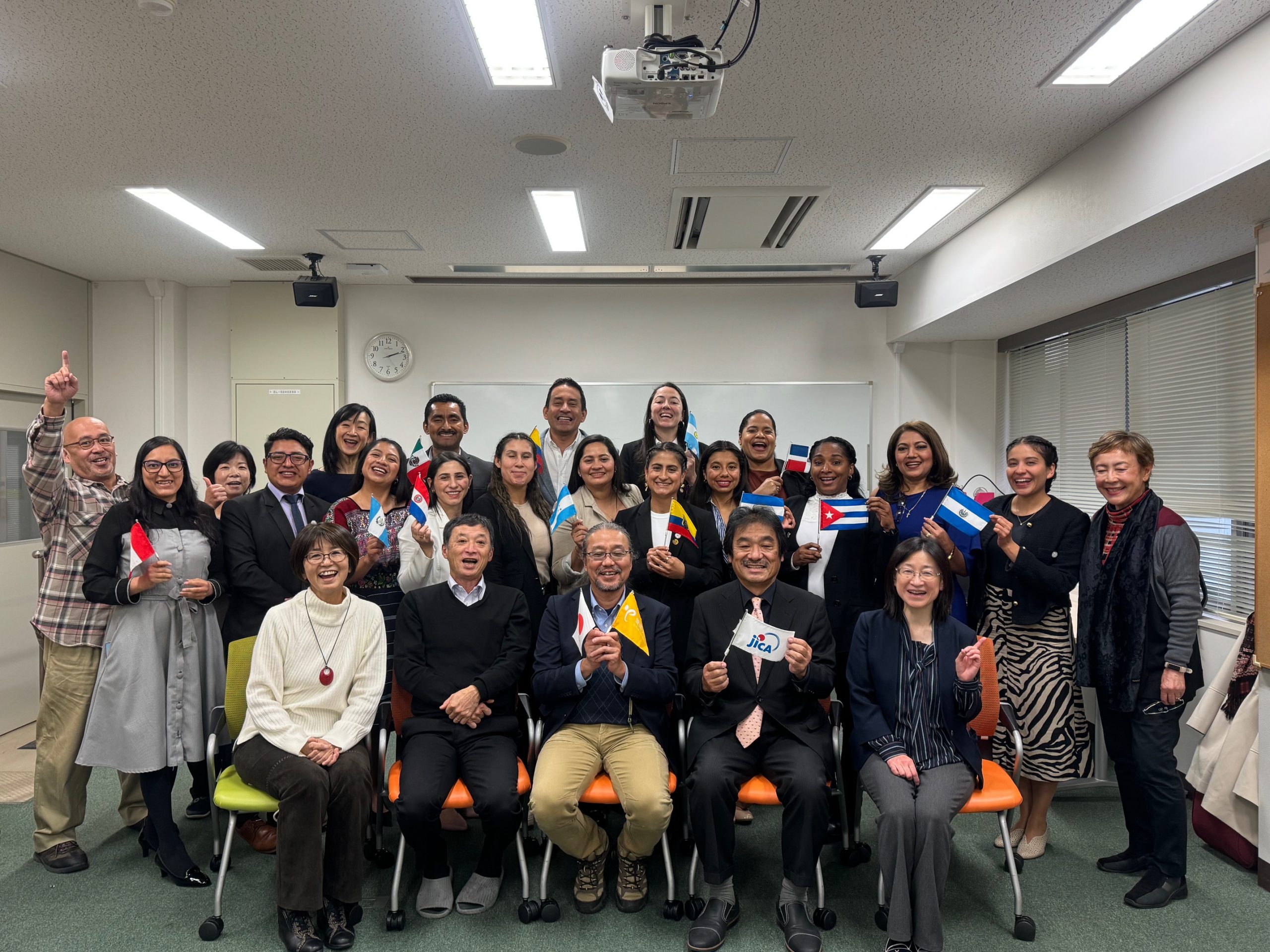
This year, 15 participants from 12 Spanish-speaking countries in Latin America joined the program, marking the largest number of participating countries and trainees in any JICA KCCP ever commissioned to the university. The program consisted of an online pre-program, an in-person training in Japan, and an online post-program. The in-person training in Japan was extended by two days from the previous year, lasting for a total of four weeks. During their stay, the participants attended lectures at Ehime University and visited wholesale markets, retail stores, and shopping arcades in Matsuyama City, as well as Uwajima City, Seiyo City, Yawatahama City, and Gogoshima Island. Through on-site experiences and exploration of local areas, they learned about successful examples of food value chain development in Ehime Prefecture. As with last year, we received generous support from local governments, companies, organizations, and individual business owners in the agriculture, livestock, and fisheries sectors in Ehime Prefecture for these visits.
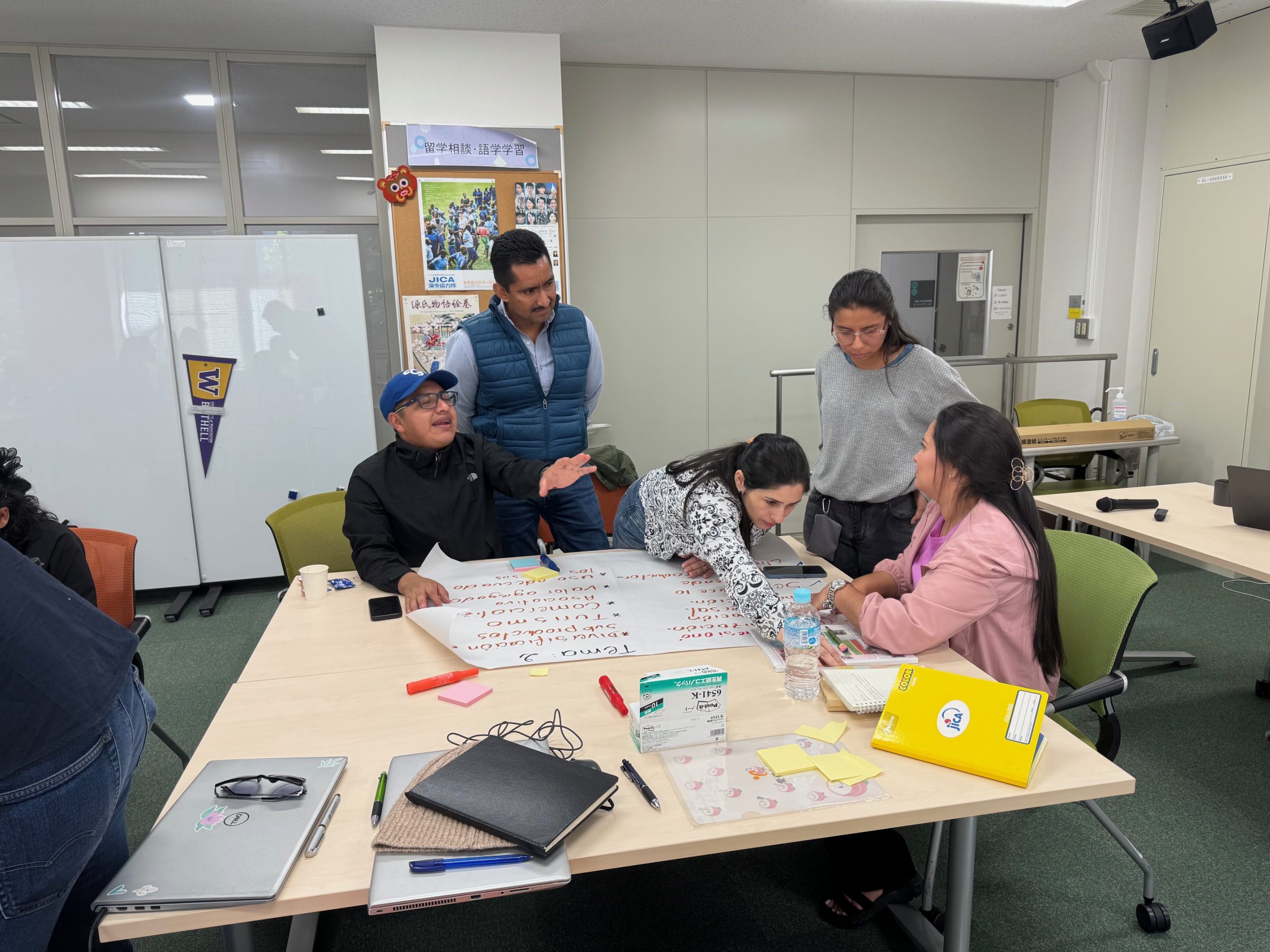
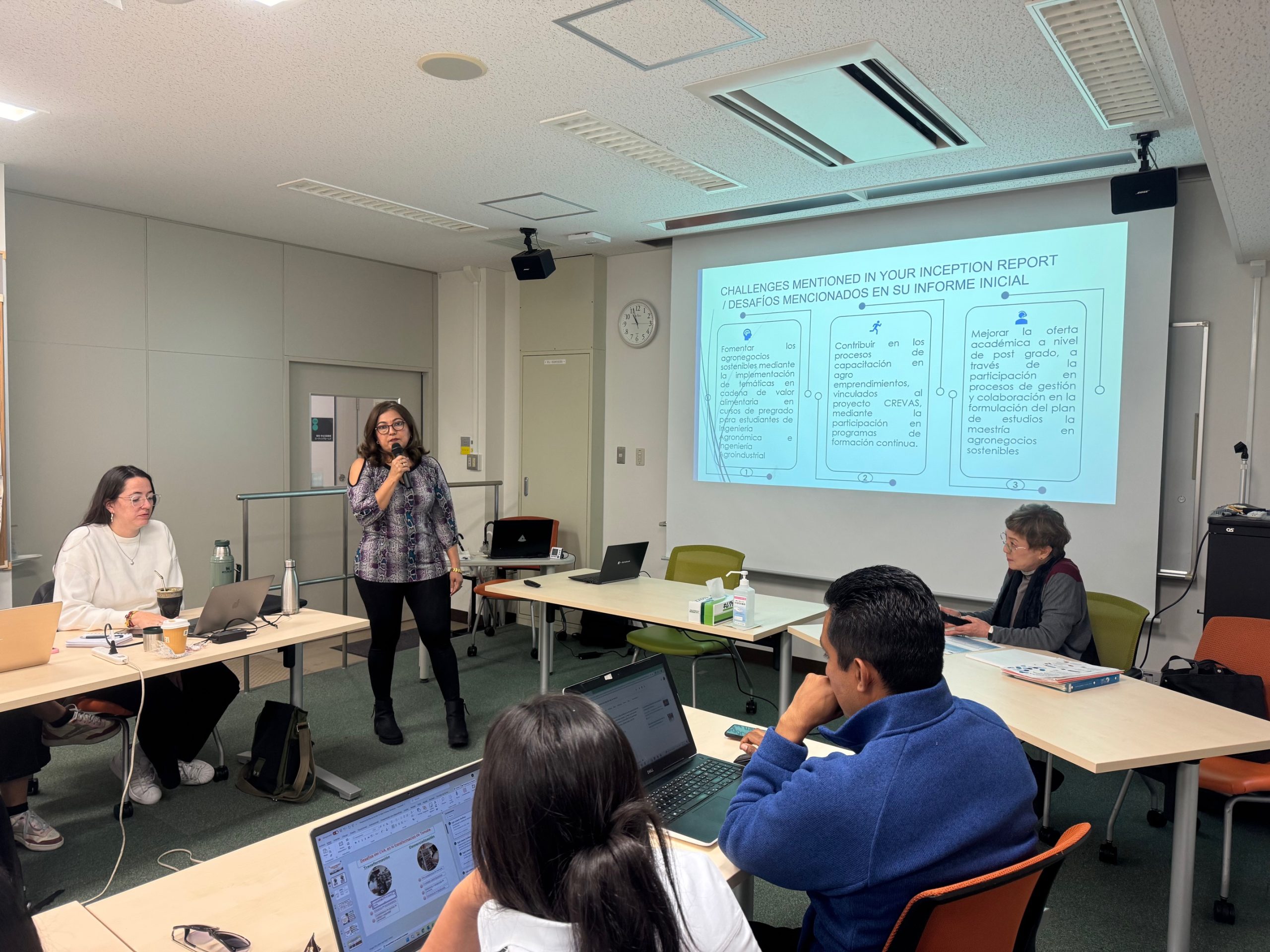
The training proved highly meaningful for the participants due to several enhancements: the synergistic effect of implementing the online pre-program, the addition and strategic arrangement of site visits focusing on the fisheries and agricultural sectors, and the use of flowcharts and correlation diagrams to clarify each site’s position within the food value chain. Furthermore, the program was enriched by expanded reflection sessions and the creation of interim activity plans. The program also offered opportunities to experience Japanese culture and traditions. Based on the experiences and knowledge gained, participants developed practical activity plans for their home countries. Following their return, two online post-program sessions were held—three weeks and two and a half months later—during which participants exchanged opinions with Ehime University faculty members to review their progress and future plans. By conducting two sessions as in the previous year but optimizing their timing, the participants’ activity plans demonstrated even more concrete progress than before.
It is expected that the participants will continue their activities so that they can apply the knowledge and experience they gained about the food value chain in Japan through this program to solve issues in their home countries.
Ehime University’s Institute for International Relations will continue to strengthen collaboration with JICA and other international organizations to promote international cooperation and contribution.
*Food value chain: The linkage of added value generated in the distribution process from production to consumption related to agricultural, forestry, and fishery products and foods.
<Institute for International Relations>